This partnership between the University of Exeter, the Royal Devon University Hospital, and Congenital Hyperinsulinism International provides free genetic testing in Exeter, improving equity in congenital hyperinsulinism diagnosis.
Eligibility
Individuals with a confirmed clinical diagnosis of congenital hyperinsulinism who do not have access to genetic testing through their healthcare provider or personal resources may apply. Applications are welcome from eligible individuals worldwide.
1224 families have received testing from 67 countries around the world
Since 2018 we have provided testing for over 1200 individuals living with congenital hyperinsulinism and over 900 family members. These individuals have been referred from every continent of the world.
568 families have received a genetic diagnosis
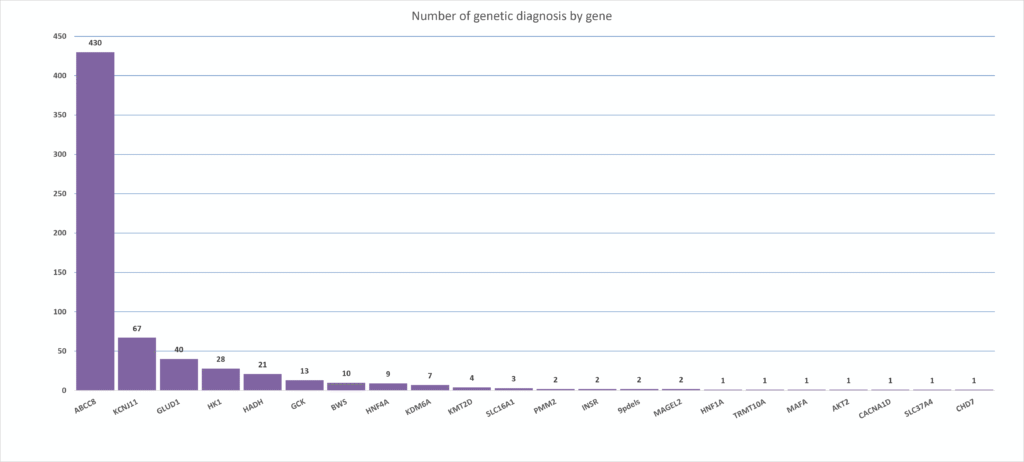
We have provided a genetic diagnosis for 568 families (53%), with disease-causing variants across a wide range of genes or genomic regions. For the remaining families, we will continue to investigate the genetic basis of their condition.
Genetic testing has played a key role in identifying whether children have diffuse or focal pancreatic disease
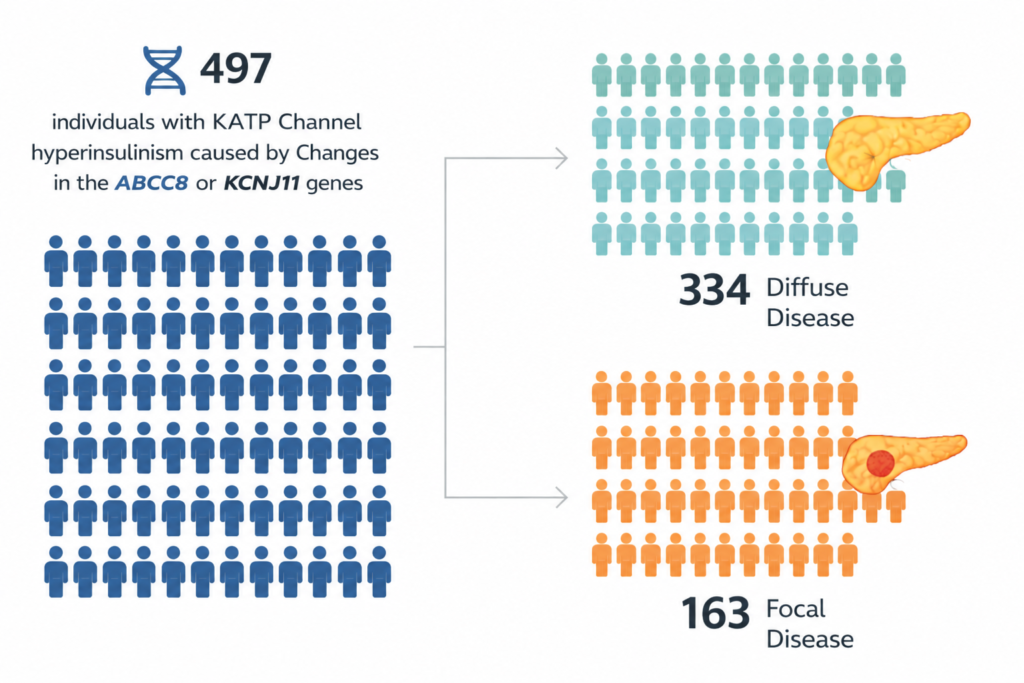
Through this project, 497 individuals received a genetic diagnosis of KATP channel hyperinsulinism caused by changes in the ABCC8 or KCNJ11 genes. This confirmed diffuse disease in 334 individuals and indicated focal disease was likely in 163 individuals. For those individuals who do not respond to therapy, this information will inform surgery.
Contribution to Research and Genetic Discoveries: 11 publications
Many individuals who have undergone testing through the Open Hyperinsulinism Genes Project have provided consent for the use of their DNA samples in research. These generous contributions has been critical to advancing scientific understanding of hyperinsulinism and have enabled significant gene discovery efforts.
These patient-driven research studies performed in Exeter have contributed to peer-reviewed publications in leading scientific journals, furthering knowledge of genetic mechanisms and improving clinical care.
Discovery of new disease genes: In 2022, we discovered that variants in the HK1 gene caused hyperinsulinism. These variants have been found in over 200 people with congenital hyperinsulinism so far, ending their long diagnostic odyssey.
Improving detection and interpretation of variants: We have used state-of-the-art genetic technologies to detect low-level mosaic variants in known hyperinsulinism genes, and used techniques such as methylation profiling and long-read sequencing to help us interpret now variants.
Expanding knowledge of the clinical presentation of genetic causes of hyperinsulinism:We have screened large cohorts of individuals with the same genetic cause of hyperinsulinism to increase knowledge of the natural history of these conditions.
Improving knowledge of syndromic conditions: We have published on syndromic forms of hyperinsulinism to help improve knowledge of these rare conditions.
Improving Knowledge of the Hyperinsulinism Landscape Across Countries: We have partnered with clinicians to document national and regional patient cohorts, generating valuable insights into how different countries diagnose, manage, and treat hyperinsulinism within the constraints of their available resources. Published reports to date include contributions from Argentina, India, and Ukraine.
Publication in Nature Health
The Open Hyperinsulinism Genes Project has been featured in Nature Health, highlighting its success as an open, collaborative approach to rare disease research. The paper presents the project as a model for improving equity in genomic medicine, showing how shared data and global participation can help ensure more inclusive access to genetic discovery and care. Read the paper here.
Knowledge Impact Award Finalists 2022
In 2022, the Open Hyperinsulinism Genes Project was named a finalist for the University of Exeter’s Fair, Just and Inclusive Society Award.