Hyperinsulinism Genes Exeter

University of Exeter Medical School, Exeter, UK

info@hyperinsulinismgenes.org

CACNA1D (Calcium Channel) gene

🧬 Gene Summary: CACNA1D
(A rare cause of congenital hyperinsulinism involving calcium channels)


What does the CACNA1D gene do?

The CACNA1D gene provides instructions to make a calcium channel (called Cav1.3). This channel allows calcium to enter cells, including insulin-producing cells in the pancreas, and helps control when insulin is released.


How can changes in the CACNA1D gene cause hyperinsulinism?

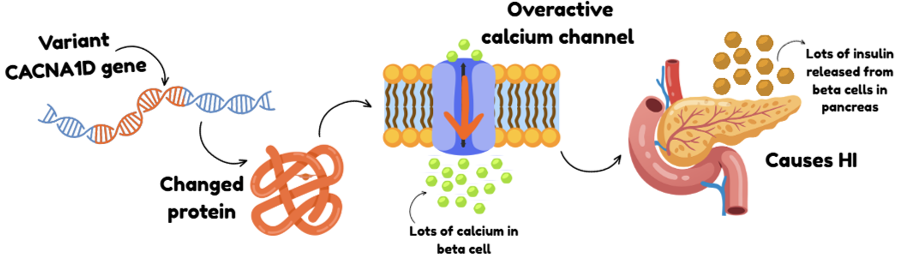
Some changes in the CACNA1D gene make the calcium channel overactive. This allows too much calcium to enter pancreatic beta cells, which can trigger excess insulin release, even when blood sugar levels are low.

This can lead to:

  • Recurrent low blood sugar (hypoglycaemia)

  • Hypoglycaemia beginning in infancy or early childhood

Because calcium signalling is central to insulin release, these changes can strongly affect blood sugar control.
 

How common are changes in the CACNA1D gene in hyperinsulinism?

CACNA1D-hyperinsulinism is very rare. Only a small number of children with congenital hyperinsulinism have been identified with changes in this gene.


How are changes in the CACNA1D gene inherited?

CACNA1D-hyperinsulinism is a dominant disorder. This means that one altered copy of the gene can be enough to cause symptoms. These changes often are:

  • New (de novo) changes

    • The gene change occurs for the first time in the child

    • Parents typically do not carry the change

💡 A genetic counsellor can help families understand inheritance and future risks.


What does a change in the CACNA1D gene mean for my child?

Children with CACNA1D-hyperinsulinism may:

  • Have low blood sugar starting early in life

  • Require frequent feeding, medication, or IV glucose

  • Have symptoms that range from mild to more persistent hypoglycaemia

Because CACNA1D also plays a role in other parts of the body, some children may have additional features, and care is usually coordinated by a specialist team.


How does this affect treatment?

Knowing a child has a CACNA1D gene change helps doctors:

  • Choose medications carefully

  • Plan close blood sugar monitoring

  • Coordinate care with other specialists if needed

A genetic diagnosis helps guide a more targeted and thoughtful treatment plan.


Where can I learn more or get support?

  • Talk with your child’s hyperinsulinism care team

  • Meet with a genetic counsellor

  • Connect with hyperinsulinism family support organizations

Our CACNA1D-HI patient information sheet provides more information on this form of hyperinsulinism. This can be downloaded from our Resources for Families page.